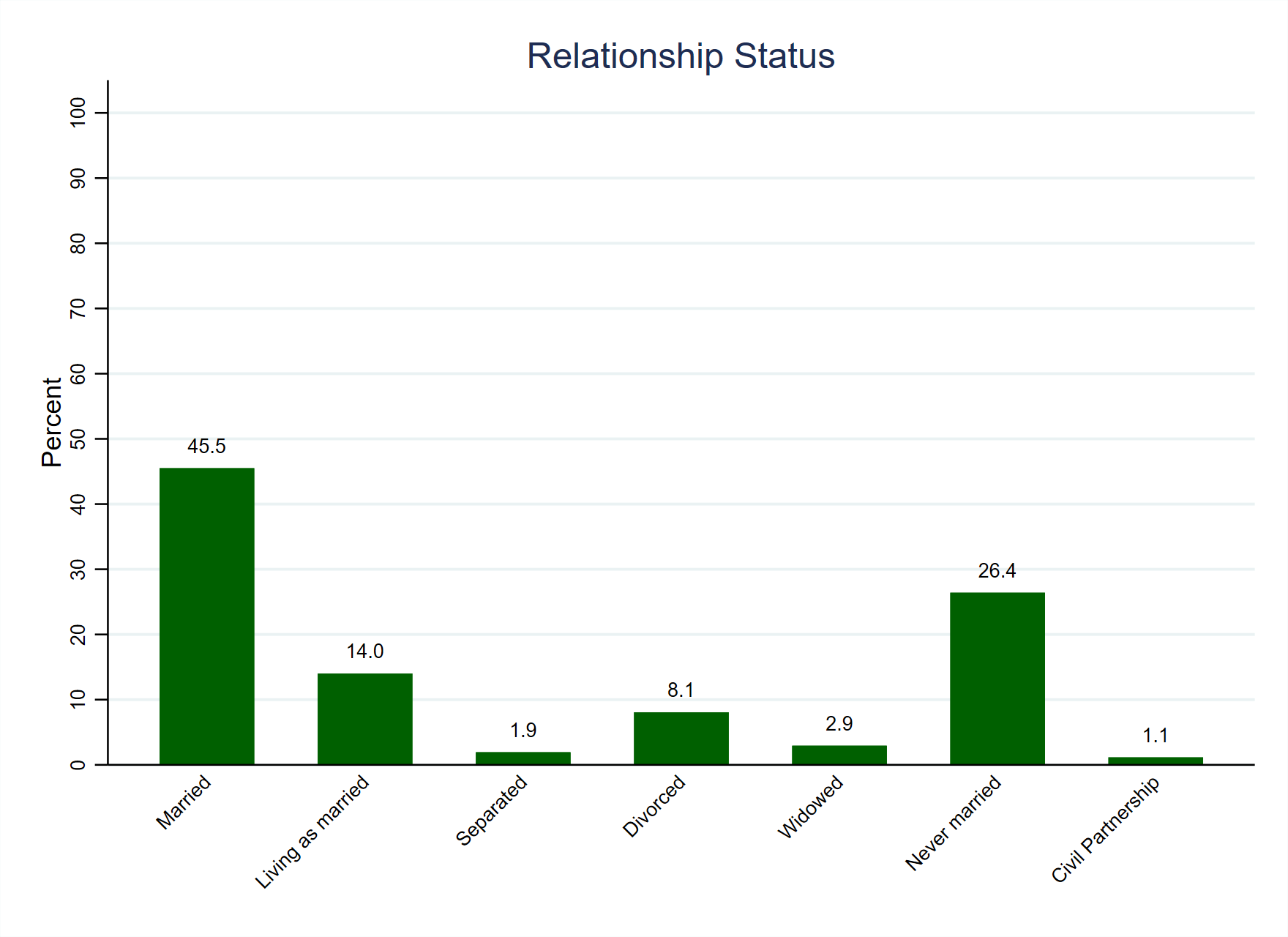
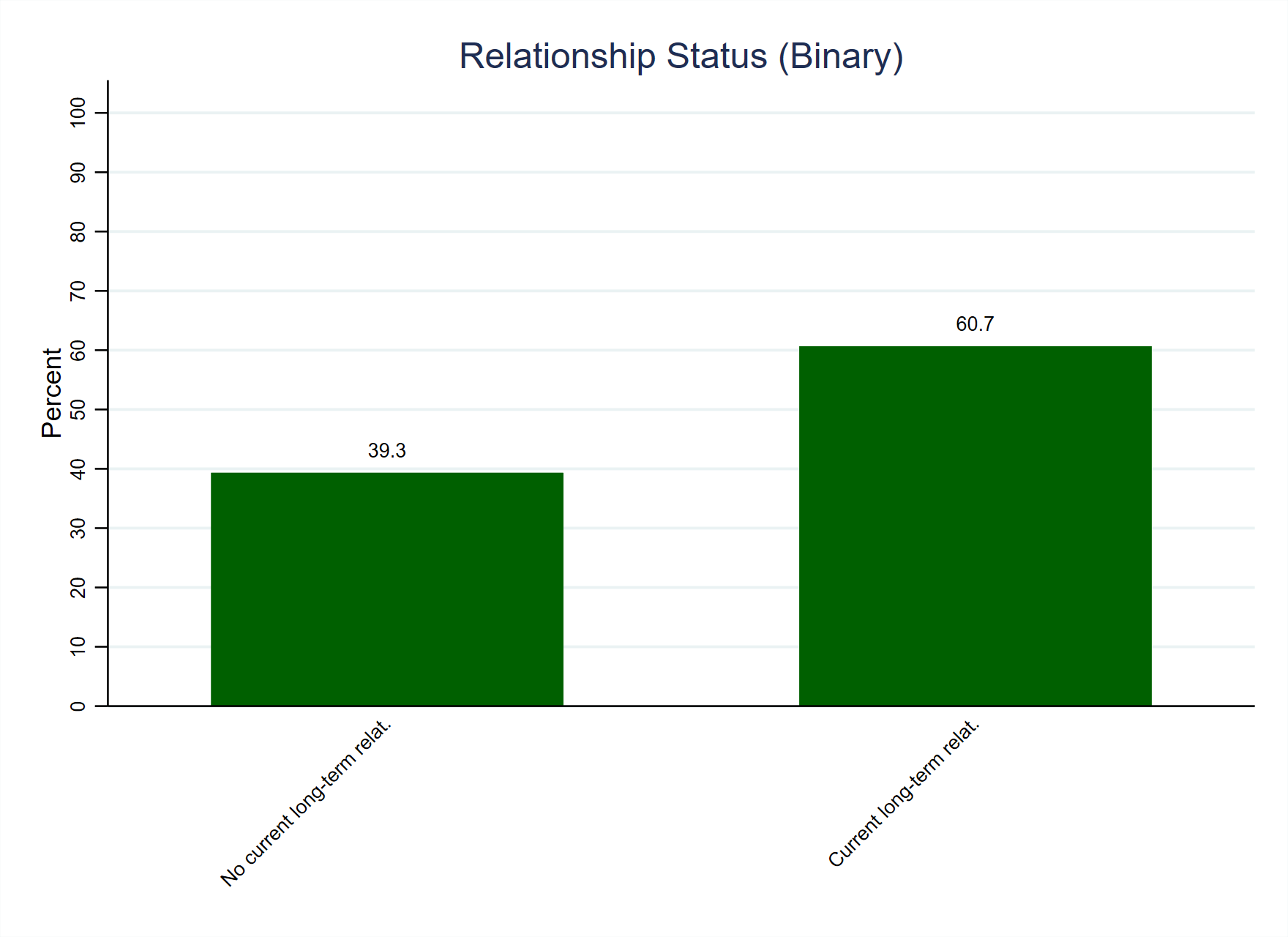
Figure 1 graphs the relationship status variable and shows that a plurality of respondents (45.5%) in the weighted sample are married, with the next largest group being the quarter of respondents (26.4%) who had never been married. There are no answers to be coded as missing values in the variable but it is helpful to recode it into a binary with categories for those who are or are not currently in a long-term relationship. The result of this recoding is presented in Figure 2, which shows that three fifths of respondents (60.7%) are in some form of long-term relationship. The details of the original and recoded variables are presented below Figure 2.
| Variable name | back_maristat |
| Number of cases | 1,405 |
| Number of categories | 7 |
| Categories to code as missing | None |
| Cases to code as missing | 0 |
| Recoded variable name | back_maristat_b |
| Number of cases | 1,405 |
| Number of categories | 2 |
| New and old categories | ‘No current long-term relationship’ = ‘Separated’ + ‘Divorced’ + ‘Widowed’ + ‘Never married’ ‘Current long-term relationship’ = ‘Married’ + ‘Living as married’ + ‘Civil Partnership’ |
 Privilege and Participation